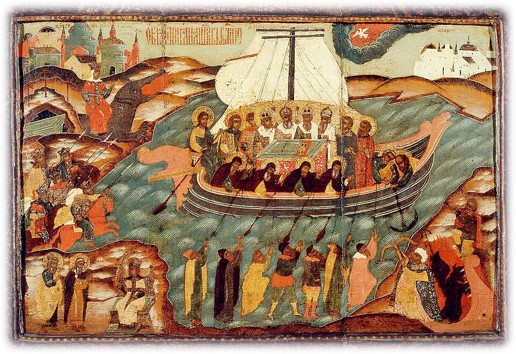
How Orthodoxy is distinctive compared to Western Christianity
by Dr Maxim Venetskov
Orthodox Christianity and Western Christianity share the same foundations: faith in the Trinity, the Incarnation, the Resurrection, and salvation in Christ. Those convictions still bind East and West. What divides them is not only a dispute over wording in the Creed so much as the way that Creed has been lived, prayed and argued.
The usual markers are familiar. In 1054 East and West formally divided. In the sixteenth century the Reformation split the Latin West again. Those dates matter. They do not explain the depth of the difference. The schism of 1054 was the canonical rupture. The Reformation was a further quarrel inside an already Western world. The more decisive contrasts lie underneath both events: in the doctrine of God, in the meaning of salvation, and in the nature of the Church.
The argument begins with a glossary of some important Orthodox theological terms that do not translate well into English. This is followed by pictures and discussion of two icons of the Orthodox Church portrayed as ships assailed by adversaries, making the contrast between East and West look absolute. The differences between Western Christianity and Eastern Orthodoxy are then examined in layers. The deepest layers – the cultural and intellectual influences (or habits of mind) - predate the split between East and West in 1054. Next is organisational structure and authority: the conciliar order of the East compared to the centralised order of Rome. In terms of theology, we then consider the Filioque, theosis, Orthodoxy’s anti-juridical account of sin and healing, and the mysteries of initiation and the Eucharist. Finally, we turn to the Eastern emphasis on Tradition, which Orthodoxy claims to be fixed yet quietly adapts. Orthodoxy is not one climate. Greece, the Balkans, the Slavic churches and the diaspora have received the same Liturgy and the same councils and have still become different worlds.
- Glossary
Before any comparison can be drawn fairly, a few words need to be set down first. They are not mere decoration. In Orthodoxy, the vocabulary itself already carries the argument: certain terms hold within them centuries of theological reflection that English can only gesture toward and often has to stretch to accommodate. Each entry below gives the Greek term and a Russian form based on Slavonic. The Greek is the language in which this theology first took shape. The Slavonic-Russian words show how that inheritance was received and renamed as the faith moved from Byzantium into Rus’.
Orthodoxia / Pravoslavie (Orthodoxy)
The word means more than correct belief. It is also right glory: the right way of honouring God, in the Church’s worship and in ordinary life at home. Orthodoxy is ‘correct praise’ lived in faith, prayer and the sacraments, more precisely called the mysteries.
Pistis / Vera (living faith)
Literally faith, trust or belief. In the Orthodox context, pistis is a living, dynamic trust in God, inseparable from love, obedience, good works, and participation in the life of the Church. It is not primarily an intellectual assent but something embodied – faith enacted rather than merely held.
Paradosis / Predanie (Holy Tradition)
The inspired deposit of faith handed down through the Church Fathers: the living transmission of the apostolic faith from one generation to the next, encompassing Scripture, the decisions of the Ecumenical Councils, and the accumulated life and witness of the Church.
Leitourgia / Liturgiya (Divine Liturgy)
The central act of worship in the Orthodox Church: literally a “work of the people,” an offering of thanksgiving and a mystical sacrifice to God.
Geron / Starets (Elder)
A living spiritual father or mother who guides souls, hears confessions and offers discernment. In Orthodox life, especially in the monastery, obedience to an elder is treated as a central path of spiritual growth.
Katholikotēs / Sobornost (Catholicity)
Literally “according to the whole,” this term denotes the fullness of the Church – not centralised under a single authority but realised through the harmonious consensus of the whole body of believers: bishops, clergy, and laity together. This term stresses that communal, organic unity and conciliar character of Orthodoxy, standing in contrast to Western models built more on primacy or individual authority.
Ekklēsiopoiēsis / Votserkovlennost (‘Churching’)
In English this last, modern term is usually rendered as “ecclesial integration” or “incorporation into the Church.” It names the gradual process by which a person becomes fully immersed in the Church’s life – through regular participation in the mysteries, spiritual guidance, and the surrounding community. To be ‘churched’ is to have the Church shape every dimension of one’s existence, not merely one’s religious observance.
Login or subscribe below to continue reading this article
 Maxim Venetskov holds doctorates from Paris-Sorbonne (2018) and KU Leuven (2023) and is a Postdoctoral researcher in the School of Critical Studies (Theology and Religious Studies) at the University of Glasgow. He is building an electronic database and preparing a critical edition for the project ‘Titles of the New Testament’. His recent work examines the manuscript tradition and textual criticism of Byzantine biblical and ascetic texts, including the titles of John Climacus’ Ladder of Divine Ascent and the Euthalian apparatus of the Apostolos in the Greek corpus.
____________________
Image: The persecution of the Church of God. State Tretyakov Gallery, Moscow. Late 17th or early 18th century. Public domain