Sixty years after Vatican II: is Catholic engagement with the ecumenical movement to be regarded as a success or failure?
by Stuart R Wilson, BD, FCMI, MCIPR
The Second Vatican Council, held between 1962 and 1965, brought about a fundamental reorientation in the Catholic Church’s relationship with other Christian traditions. Its Decree on Ecumenism, Unitatis Redintegratio, began with a striking declaration: ‘The restoration of unity among all Christians is one of the principal concerns of the Second Vatican Council’. Those words represented a major change. Before the Council, Catholic approaches to Christian unity had largely been framed in terms of other Christians returning to the Roman Catholic Church. Vatican II did not simply abandon the Catholic Church’s convictions about itself, but it introduced a new language of dialogue, relationship, mutual understanding and shared pilgrimage.
This was perhaps the Council’s greatest ecumenical achievement. It established the pursuit of Christian unity as a permanent and central responsibility of the Catholic Church. Ecumenism was no longer to be regarded as a specialist interest or an optional pastoral activity. It became part of the Church’s understanding of its own mission. Sixty years later, however, how should the results be judged? Has Catholic engagement with the ecumenical movement been a success, or has it failed to achieve the visible unity for which Christ prayed?
The answer is not straightforward because there have been significant theological agreements, dramatic changes in relationships and remarkable examples of practical co-operation. At the same time, the churches remain divided, particularly over questions of authority, ministry and the nature of the Church itself. The ecumenical journey since Vatican II should therefore be regarded as a genuine, if incomplete, success. Its greatest achievement has not been the creation of one united institution, but the irreversible transformation of relationships between Christians.
From suspicion to dialogue
Vatican II encouraged Catholics to recognise other Christians not simply as outsiders or opponents to be encouraged back into the fold, but as sisters and brothers in Christ. The Council acknowledged that elements of holiness and truth could be found beyond the visible boundaries of the Catholic Church and that other Christian communities were genuine partners in dialogue.
The change in atmosphere was immediate. New academic, theological and pastoral conversations developed across denominational boundaries. The Journal of Ecumenical Studies, founded in 1964, described itself as being born out of the ecumenical spirit of Vatican II. It reflected a growing desire among Christians to learn from one another rather than merely defend themselves against one another.
The Council was nevertheless careful to balance openness with Catholic conviction. It taught that ecumenical engagement must be conducted in a manner that was ‘fully and sincerely Catholic’. Dialogue did not mean that churches should pretend their differences were unimportant or abandon the beliefs that had shaped them.
This created a tension that remains at the heart of Catholic ecumenism. The Church enters dialogue sincerely, seeking a more truthful understanding of other traditions. Yet it also retains its belief that the fullness of the Church of Christ subsists within the Catholic Church.
For some ecumenical partners, this can raise questions about whether the conversation is genuinely between equals. Is dialogue an open journey of mutual discovery, or does it still carry an expectation that others will eventually accept the Catholic understanding of the Church?
That tension has never been fully resolved. Even so, Vatican II established principles that permanently changed the character of Christian engagement.
Unitatis Redintegratio called on Catholics to avoid words, judgements and actions that misrepresented other Christians. It encouraged informed theological discussion and urged Christians to understand one another’s beliefs as they themselves understood them.
Dialogue was no longer to be treated as a contest in which one side defeated the other. It was to become a process of listening, learning and seeking truth together.
Ecumenism begins with conversion
One of the most challenging aspects of the Council’s teaching was its insistence that ecumenism requires self-examination.
The pursuit of unity, it stated, calls the Church to ‘continual reformation’. Because the Church is made up of human beings and exists within human history, it must constantly be renewed through greater faithfulness to Christ.
This was a striking choice of language in a document that also discussed the divisions arising from the Protestant Reformation. The Catholic Church was not simply identifying errors in other traditions. It was admitting its own continuing need for repentance and renewal.
That principle was later developed by Pope John Paul II in his 1995 encyclical Ut Unum Sint — ‘That They May Be One’. He insisted that ecumenism was not a pastoral option but an essential part of God’s plan for the Church. He also warned that dialogue must not remain merely at the level of meetings, formal statements and exchanges of opinion. It must become a ‘dialogue of conversion’ and an examination of conscience.
This remains one of the most important tests of ecumenical sincerity. Churches cannot credibly call others to reconciliation while refusing to confront their own failures.
For the Catholic Church, the revelations of clerical sexual abuse and its concealment by parts of the hierarchy have been a profound moral and ecclesiological failure. The suffering of children and vulnerable adults, including the abuses associated with church-run institutions such as residential schools in Canada, has seriously damaged the Church’s moral authority.
These failures do not make ecumenism irrelevant. They make the Council’s call to conversion even more urgent. Christian unity cannot be built only through carefully worded agreements. It depends upon honesty, repentance and the willingness of churches to allow themselves to be changed.
Healing the wounds of history
Pope John Paul II understood that Christian division was not simply a matter of theological disagreement. It was also rooted in memories of persecution, conflict and injustice.
One important example was his response to the death of the Bohemian reformer Jan Hus. Hus called for reform within the Church a century before the Protestant Reformation. He was condemned as a heretic by the Council of Constance and burned at the stake in 1415.
Speaking at an international symposium in 1999, John Paul II expressed ‘deep regret for the cruel death inflicted on Jan Hus’. He also acknowledged the wound of conflict and division imposed upon the minds and hearts of the Bohemian people and praised Hus’s moral courage.
This did not amount to a complete reversal of every historical judgement concerning Hus. It did, however, demonstrate that reconciliation required more than doctrinal discussion. It required the Church to acknowledge the pain caused by its own actions.
Such gestures cannot undo the past. Nor should they be dismissed as merely symbolic. Historical wounds shape the identities of Christian communities, sometimes for centuries. Naming those wounds honestly helps to create the spiritual and emotional space in which theological dialogue can continue.
A breakthrough on justification
Perhaps the clearest doctrinal success of Catholic ecumenism since Vatican II came in 1999 with the Joint Declaration on the Doctrine of Justification.
The declaration was signed by the Catholic Church and the Lutheran World Federation. It addressed the question at the heart of the sixteenth-century Reformation: how human beings are made right with God.
Catholics and Lutherans declared that they now shared ‘a common understanding of our justification by God’s grace through faith in Christ’. As a result, they agreed that the condemnations made by each side during the Reformation no longer applied to the teaching of the other as expressed in the declaration.
This was a remarkable achievement. A dispute that had helped divide Western Christianity for almost five centuries was no longer considered church-dividing in the same way.
The declaration did not mean that Catholics and Lutherans suddenly agreed on every aspect of salvation, grace or the Christian life. Critics argued that some differences had been carefully managed rather than completely resolved. Important disagreements also remained over the Eucharist, ordained ministry, authority and the nature of the Church.
Nevertheless, the Joint Declaration demonstrated that sustained dialogue could overcome even profound theological divisions.
Its importance increased when other Christian traditions affirmed it. The World Methodist Council did so in 2006, followed by the Anglican Consultative Council in 2016 and the World Communion of Reformed Churches in 2017.
The declaration therefore developed from a bilateral Catholic-Lutheran agreement into a wider consensus involving five Christian world communions. It stands as substantial evidence that post-Vatican II ecumenism has produced real and measurable results.
Full institutional unity has not followed, but Christians who once condemned one another over the doctrine of salvation can now recognise a shared understanding of God’s grace and that should not be underestimated.
The continuing challenge of East and West
Progress between the Catholic Church and the Eastern Orthodox Churches has been more difficult.
This is one of the most important relationships in the ecumenical world. Catholicism and Orthodoxy represent the great Christian traditions of West and East. They share ancient creeds, apostolic ministry, sacramental life and a profound sense of continuity with the early Church.
Yet the division between them has endured for almost a thousand years.
The main obstacles are not disagreements about the Trinity or the person of Christ. They concern the structure and authority of the Church. Questions of papal primacy, universal jurisdiction, synodality, ministry and the role of the Eastern Catholic Churches remain deeply contentious.
The Catholic Church understands the Bishop of Rome as possessing a universal ministry of unity. The Orthodox Churches recognise a primacy of honour but reject the idea that one bishop should exercise universal jurisdiction over the whole Church.
The challenge is therefore not simply to agree that primacy is necessary, but to agree what kind of primacy could be exercised in a reunited Church.
The historical relationship between Orthodox Churches and Eastern Catholic Churches has created further difficulty. Some Orthodox Christians see Eastern Catholic communities as the result of attempts to draw Orthodox believers into union with Rome while allowing them to retain their liturgical traditions. This history can make Catholic language about progressing towards the “fullness” of unity sound threatening to Orthodox identity and independence.
The late Orthodox theologian Alexander Schmemann was sharply critical of the modern ecumenical encounter between Orthodoxy and the West. He argued that its failures could not be disguised by official meetings or high-profile gatherings.
His judgement reflects a real frustration. Decades of dialogue have produced important theological documents and warmer personal relationships, but they have not yet brought full communion.
Even here, however, it would be misleading to speak only of failure. Popes and Ecumenical Patriarchs now meet, pray and speak of one another as brothers in Christ in a way that would once have seemed extraordinary.
In June 2025, Pope Leo XIV reaffirmed his desire for ‘full visible communion’ during a meeting with a delegation from the Ecumenical Patriarchate of Constantinople. The structural problems remain, but the commitment to dialogue continues.
Scotland as a model of practical ecumenism
The Scottish context provides a particularly compelling example of what post-Vatican II ecumenism can achieve.
Scotland’s religious history has often been marked by bitter divisions between Catholics and Protestants. These divisions were not confined to theological debate. They affected politics, education, employment, family relationships and community life.
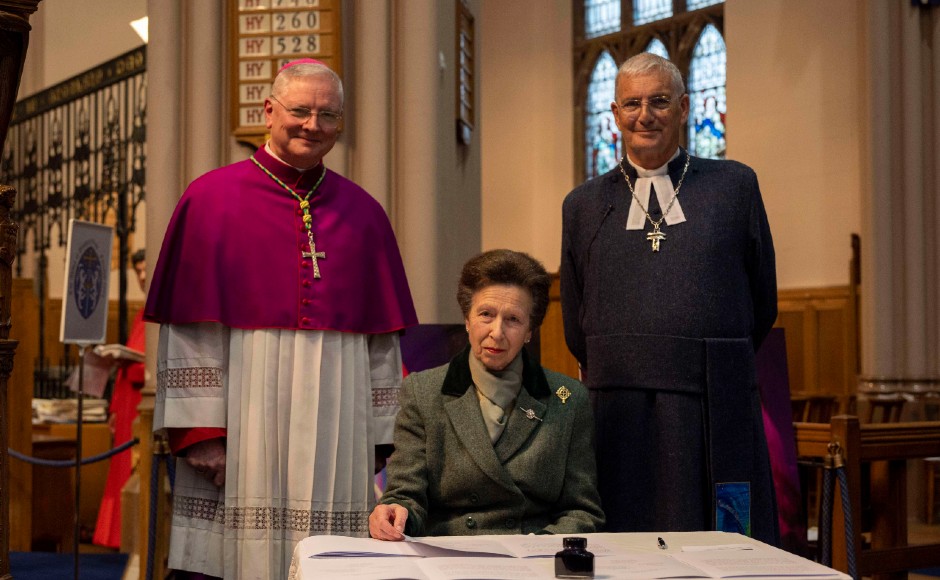
Against that background, the Saint Margaret Declaration, signed by the Catholic Church in Scotland and the Church of Scotland in November 2022, represented a landmark moment.
Signed at Dunfermline Abbey, the declaration formally recognised a relationship of friendship between the two churches. It acknowledged the failures of the past, stating that much could have been said more kindly, written more magnanimously and done more charitably.
That sentence is important because it does not pretend that historical disagreements never existed. Nor does it require either church to abandon its identity. It acknowledges that Christians often compounded their disagreements through hostility, suspicion and uncharitable behaviour.
The declaration also affirmed that what the churches hold in common is often greater than what divides them. It committed Catholics and members of the Church of Scotland to live as sisters and brothers in Christ, to pray with and for one another, to be good neighbours, and to work together in life and mission.
This mature form of ecumenism does not wait for every doctrinal question to be resolved before Christians can act together. It recognises that friendship, prayer and common mission are themselves part of the journey towards unity.
The declaration is reflected in practical relationships across Scotland.
One example can be found in Maryhill in Glasgow. Maryhill Ruchill Parish Church, part of the Church of Scotland, works closely with the neighbouring Catholic parish of the Immaculate Conception.
Their relationship is not confined to an annual pulpit exchange or a service during the Week of Prayer for Christian Unity. The two congregations jointly support a mission and development worker under the banner ‘Together We Make Maryhill’. This is ecumenism made visible in the life of a community. The churches remain distinct, but they share resources and work together in service to the people around them both in the name of Christ.
It is difficult to imagine such a partnership developing without the change in Catholic thinking initiated by Vatican II. The Council’s language of mutual respect has moved from official documents into local relationships, shared mission and friendship.
The ecumenical landscape in Scotland developed further in September 2025 when the Catholic Church in Scotland and the Scottish Episcopal Church signed the Saint Ninian Declaration.
The declaration committed the churches to deepening their relationship and working more closely together while acknowledging their continuing differences.
Archbishop Leo Cushley described the spirit of the agreement by saying that true friendship does not demand uniformity but grows through honesty, trust and love. The Primus of the Scottish Episcopal Church spoke of the churches walking forward together as friends on the journey of faith begun by Ninian more than a thousand years ago.
This language represents an important development in ecumenical thinking. Unity does not require Christians to become identical. Friendship can deepen even when some differences remain unresolved.
The Scottish declarations have also been accompanied by significant symbolic encounters at the highest levels of church and national life.
On several occasions during the past decade, Moderators of the General Assembly of the Church of Scotland have met the Pope, either during papal visits to Scotland or through visits to Rome.
In October 2025, the Moderator, the Rt Rev Rosie Frew, accompanied King Charles III and Queen Camilla on a visit to the Vatican to meet Pope Leo XIV. The Moderator attended ecumenical worship in the Sistine Chapel on the theme of care for creation. The occasion was especially significant because it marked the first time a British monarch had prayed publicly with the Pope since before the Reformation. It would be easy to dismiss such events as ceremonial. Yet symbols matter, especially when they overturn the symbols of former hostility.
The Pope, the King, the Queen and the Moderator of the General Assembly praying together in the Sistine Chapel would have been almost unimaginable to earlier generations of Christians. It demonstrated that the Saint Margaret and Saint Ninian declarations were not isolated statements. They formed part of a much wider transformation in Catholic-Protestant relations.
Success, failure or unfinished pilgrimage?
It is possible to tell the story of modern ecumenism in two very different ways.
One version emphasises disappointment. The excitement following Vatican II has sometimes faded. Church leaders continue to issue declarations, but Christians remain institutionally divided. Catholics and many Protestants cannot normally share the Eucharist. Catholic and Orthodox Christians remain separated. Questions of ministry, authority and sexuality have introduced further tensions within and between churches. From this perspective, the ecumenical movement appears to have lost momentum.
Another version recognises how much has changed. Churches that once condemned one another now pray together. Theological disputes that divided Christians for centuries have been substantially resolved. Popes have asked forgiveness for the sins of the Church. Catholics, Lutherans, Methodists, Anglicans and Reformed Christians have reached a common understanding on the doctrine of justification. Catholics and members of the Church of Scotland work together in local communities, share in public witness and formally recognise one another as friends in Christ. The churches are not united, but neither are they enemies. That change is one of the great Christian achievements of the past sixty years.
Catholic engagement with the ecumenical movement should therefore be regarded as a success, although not a completed one. Its success lies in the irreversible transformation of relationships, the establishment of common theological ground and the creation of practical models of co-operation.
Its limitations are equally real. Structural divisions remain, particularly over authority, ministry and the nature of the Church. The Catholic Church’s own moral failures have also weakened its witness and revealed how much ‘continual reformation’ is still required.
Vatican II did not provide an easy route to institutional reunion. It placed the Catholic Church on a pilgrimage of dialogue, conversion and friendship.
The destination has not yet been reached. But the journey has changed the churches, and in many communities across Scotland and throughout the world, it is already changing the way Christians live together.
 Stuart Wilson is a former newspaper journalist who moved into the world of strategic communications, heading up teams in organisations like Strathclyde Police, Inverclyde Council, NHS Lothian and in the private sector. He sensed a call to Ministry in 2022 and gave up his job to go back to university and study for a Bachelor of Divinity. He has undertaken placements in training at Bishopton Parish Church, St Machar's Ranfurly in Bridge of Weir, Maryhill Ruchill Parish Church, and New Kilpatrick Church, Bearsden. He was locum minister at Kilmacolm Parish Church for four months in 2025 while completing his BD at the University of Glasgow. He is currently the Probationary Minister at Glasgow Cathedral and has previously sat on Scottish Government bodies tackling sectarianism in Scotland. Stuart is married with four children.
____________________
Image: Archbishop Leo Cushley, Princess Anne, and Rev Dr Iain Greenshields sign the St Margaret Declaration, November 2022. Courtesy of The Church of Scotland