Receptive Ecumenism and whole body ecclesiology
by Mary Cullen
In his first major interview in 2013 with his fellow Jesuit, Antonio Spadaro, Pope Francis said that in ecumenical relations it is important not only to know each other better, but also to ‘recognise what the Spirit has sown in the other as a gift for us’. What that gift might be is the key question asked by Receptive Ecumenism, an approach to ecumenical relations between Christian traditions developed at the University of Durham’s Centre for Catholic Studies. All traditions, Receptive Ecumenism argues, are imperfect or wounded in some way, and it asks what they can learn with integrity from one another in order to become more fully what they are called to be.
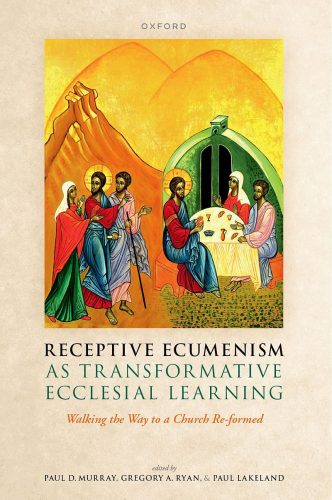
The first major symposium on Receptive Ecumenism was held in Durham in 2006. It gave rise to a collection of essays entitled Receptive Ecumenism and the Call to Catholic Learning (Ed Paul D Murray, Oxford University Press, 2008). A second volume, Receptive Ecumenism as Transformative Ecclesial Learning, published in 2022 and edited by Paul Murray, Gregory A Ryan and Paul Lakeland, charts the continuing story of Receptive Ecumenism across Europe, America and Australia. In a chapter entitled ‘What does Rome have to learn from Geneva’ (pp 124-130) Paul Lakeland explores the concept of ‘whole body ecclesiology’, developed by the United Reformed Church, which he suggests offers important learning for the Catholic church in the light of its commitment to synodality. It also provides a model of church, he suggests, which corresponds to its turn to an inductive approach to theological reflection.
Login or subscribe below to continue reading this article
 Dr Mary Cullen is a former editor of Open House. Her PhD focused on the ecclesial relationship between ordained and lay people in the Catholic Church.
____________________
Image: Cover of 'Receptive Ecumenism', featuring the icon of the Road to Emmaus(opens in new tab) painted by Sister Marie-Paul Farran of the Mount of Olives Monastery in Jerusalem.(opens in new tab)