Music review
by
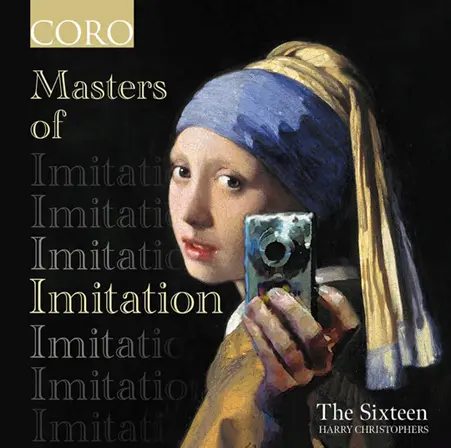
‘Masters of Imitation’ by The Sixteen, directed by Harry Christophers (Coro COR16203)
One of the many blessings of the arrival of spring each year is that we are treated to another Choral Pilgrimage by the world class choir The Sixteen. Each year since 2000, Harry Christophers and The Sixteen have prepared a fresh programme of sacred choral music and renaissance polyphony and have taken it on a ‘Choral Pilgrimage’ tour around the UK from April until November. They perform the music in the settings it was originally composed for: cathedrals, minsters, abbeys and churches. Lovers of sacred music look forward to it every year.
In the past, the Choral Pilgrimage has reached Scotland in October, at the end of its run, and that’s when I have usually heard it. My emotional encounter with the music has therefore often been tinged with the lacrimae rerum intimations of autumn.
But there is a change this year. The Choral Pilgrimage for 2024 will come to Edinburgh’s Greyfriars Kirk on Saturday 15 June for an afternoon performance at 3pm. It will be a very different experience to listen to The Sixteen’s sacred music in sun-soaked Edinburgh so soon after the Marian month of May. And this year’s musical programme is well suited to a bright afternoon in early summer: four Renaissance pieces in praise of the Virgin Mary, Queen of Heaven; three madrigals of courtly love; three arrangements of Psalm 147 (one medieval, one renaissance, one modern); a renaissance eight-voice motet setting of the Song of Songs, and a Mass (Credo) by the same composer drawing on the music of that same motet.
The programme (and CD recording) focuses on the music of the late 16th century Franco-Flemish composer Orlande de Lassus (1532-94) who was the most celebrated composer in Europe in his lifetime. He was a leading exponent of the common compositional technique of borrowing and reworking music from another source: which may have been a motet or chanson, sacred or secular, the work of another composer or earlier work by oneself. This recording gives the listener a taste of that very popular compositional practice, placing the work of Lassus alongside works by Josquin Desprez, Jean Guyot de Châtelet and others.
Like many Renaissance composers, Lassus drew on the vast corpus of church plainchant for his polyphonic compositions. This album opens with the plainsong Lauda Jerusalem Dominum (Psalm 147) and lets us also hear Lassus’ setting of Lauda Jerusalem Dominum in which the ascetic solemnity of the medieval plainchant is transformed into the bright, all-enveloping, multi-voice splendour of renaissance polyphony.
In his madrigal setting of love poetry by Petrarch (Cantai or piango - ‘I sang and now I weep’), Lassus expresses in music of sweet melancholy the courtly love ideal that suffering in the name of love is an honour and a noble pursuit: ‘I sing and now I weep, and I take no less delight in weeping than I took in singing’. One can see how easily that emotion translates to a religious context. We hear that courtly love idea resonate in Lassus’ six-voice homage to the Virgin Mary, his setting of the antiphon Salve Regina (‘Hail, Queen’): ‘To you we sigh, as we mourn and weep. Turn those merciful eyes of yours upon us.’ The piece ends with multiple repetitions of the words O dulcis virgo! expressed in a repeated musical phrase of euphoric longing.
Login or subscribe below to continue reading this article
Paul Matheson is a music reviewer and diversity officer with the police.