A failure of theology?
by Brendan Geary
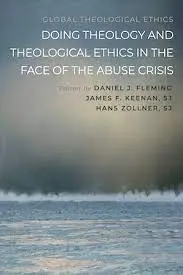
Doing theology and theological ethics in the face of the abuse crisis
Daniel Fleming, James Keenan SJ, and Hans Zollner SJ (editors)
Pickwick Publications 2003
This is a volume of twenty-two chapters which reflect on the abuse crisis in the Catholic Church from the perspectives of theology, psychology, organisational theory, gender, history, formation for ministry, and human rights. The authors – male and female, ordained, vowed, and lay – represent many cultures and contexts. They offer a focused and multi-disciplined response to the criticism that theology has been slow to respond to the abuse crisis, which Massimo Faggioli described as the Church’s biggest crisis since the Reformation (p. 272).
A number of themes weave their way through the text: the centrality of the child/victim; vulnerability; power and how it is manifested in the Church’s culture and systems; problems represented by the word ‘clericalism’; ethics in relation to abuse, power, roles and the treatment of victims; human rights; reconciliation, healing and forgiveness.
Several authors write about the centrality of the child in any discussion of abuse. Nuala Kenny writes about the tragic failure to keep the child central and asks what it means to be a child of God. She reminds us that Jesus is the eternal child of the Father and highlights the necessity of engaging in a theological exploration of what it means to be a child. Idara Otu, writing from an African perspective, notes that on the one hand African culture sees children as a blessing and a gift, but in practice, children are expected to obey. They have no voice and appear ‘as a pawn for adults to valorize for their own self-worth, identity and dignity’ (p. 91).
A number of authors discuss the issue of vulnerability in relation to children and adults. It is often seen as weakness due to something victims lack, and as negative. However, vulnerability is ‘inherent in our embodied and embedded humanity’ (p. 365). Society and canon law like to see adults as autonomous and responsible. Orphanopolous writes that we ‘need to hold vulnerability and agency together and that vulnerability is a requirement of being a moral agent’. She investigates the way the Vatican writes about adults and their vulnerabilities and highlights the limitations in Vos Estis Lux Mundi and current canon law, especially when faith, generosity, religious obedience, and the control of powerful individuals can lead to abuses and the diminishment of human dignity and self-worth. She concludes that the term ‘vulnerable adult’ is dangerous (chapter 2).
Login or subscribe below to continue reading this article
Dr Brendan Geary is a Marist Brother with a background in teaching, formation, counselling and psychology. He has worked in safeguarding for more than twenty years as a therapist, researcher, writer, and teacher. He is a member of the Care and Protection